Artistic hub at Manchester
A new productive and creative hub: Manchester-Bodega to showcase Brussels’ “makers”
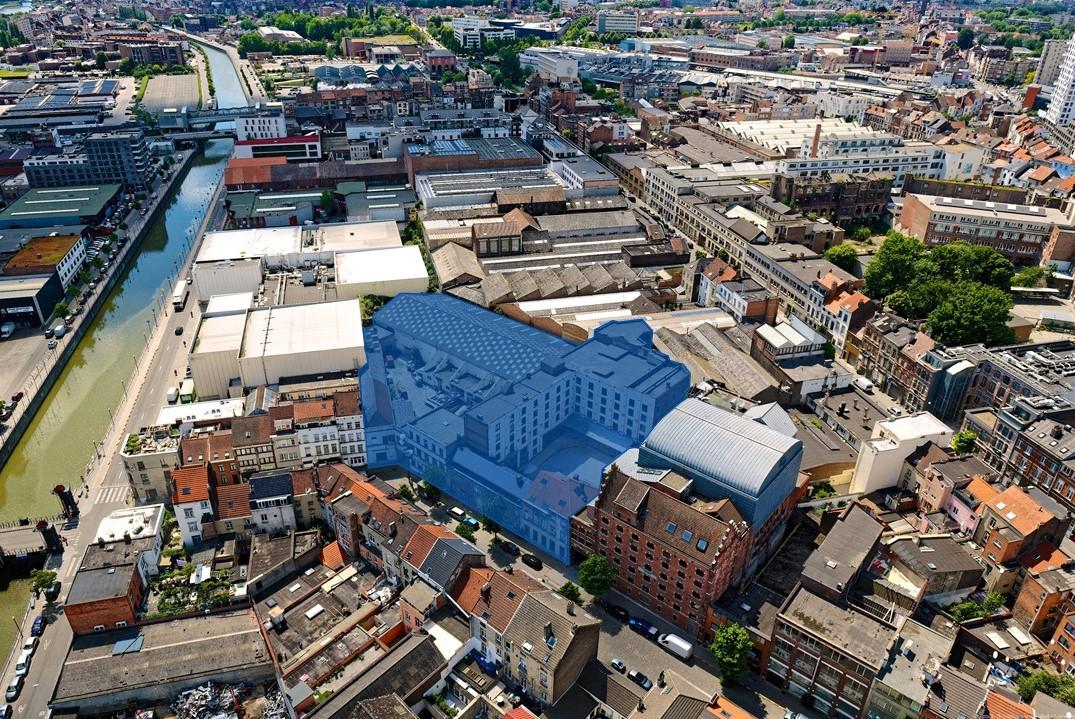
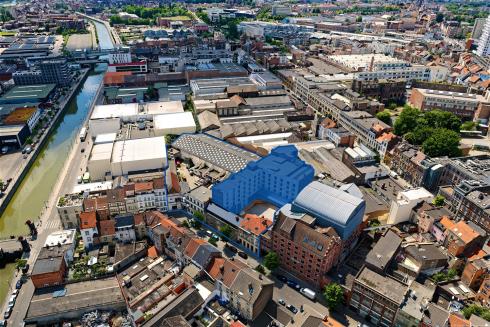
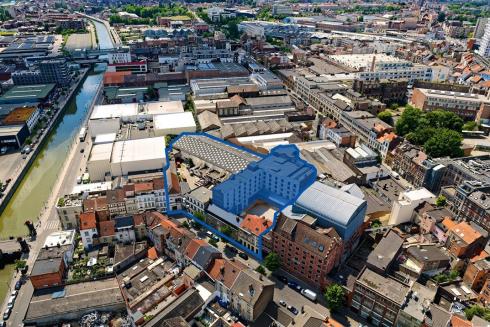
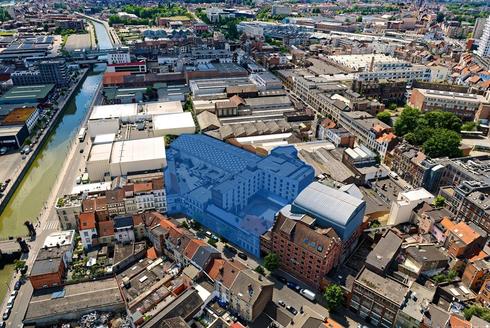
Beneath its brick vaults and metal beams, the revival of a major site in Brussels’ industrial history is now taking shape. Just a stone’s throw from the Canal, between Manchester Street and Birmingham Street in Molenbeek-Saint-Jean, the former Graeffe refinery is preparing to enter a new chapter. Yesterday, the rhythm of machines defined daily life. Tomorrow, productive and creative workshops, the shared life of the “maker” community, the vibrancy of artistic ideas and exchanges with local residents will bring the site to life.
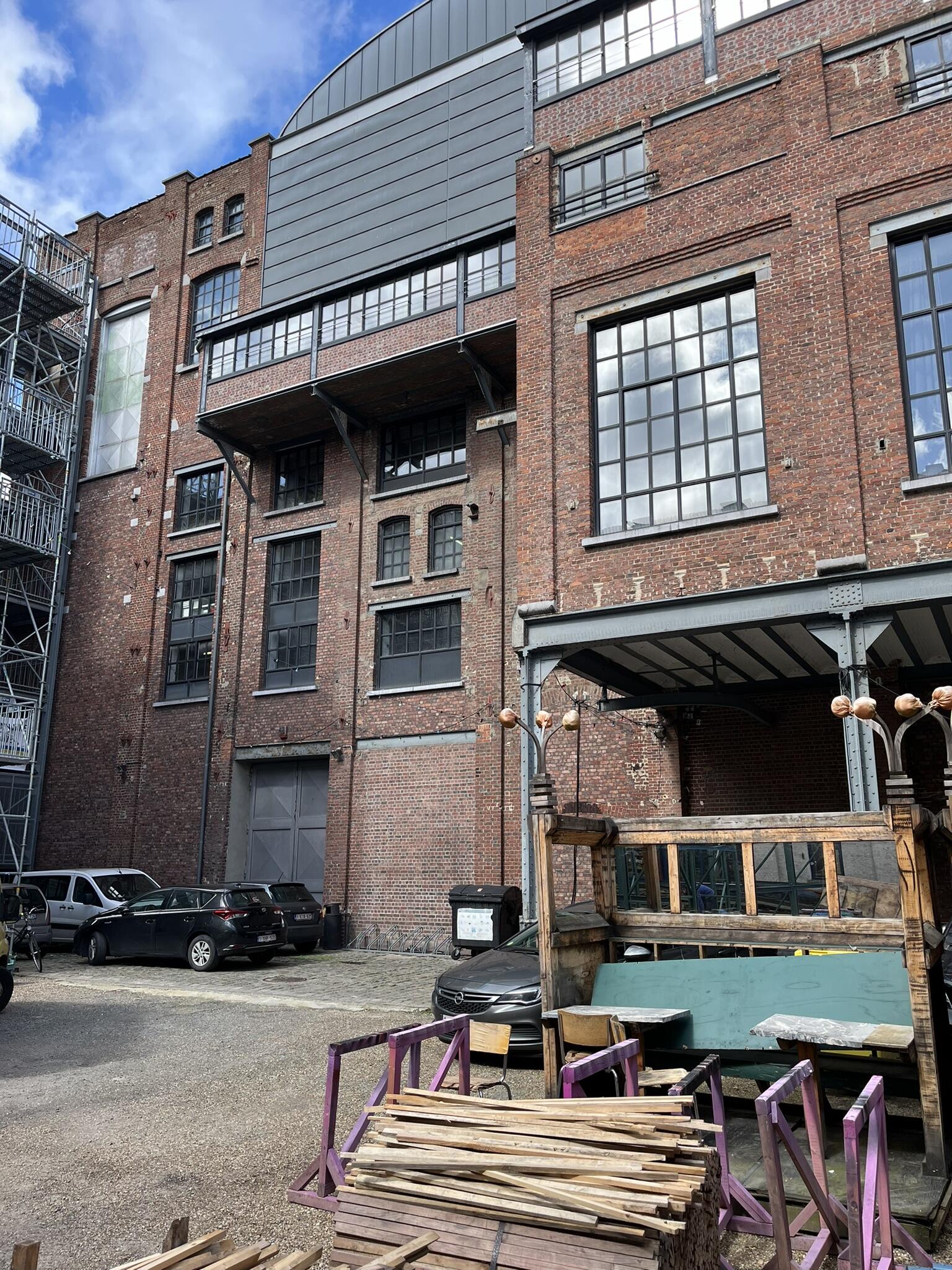
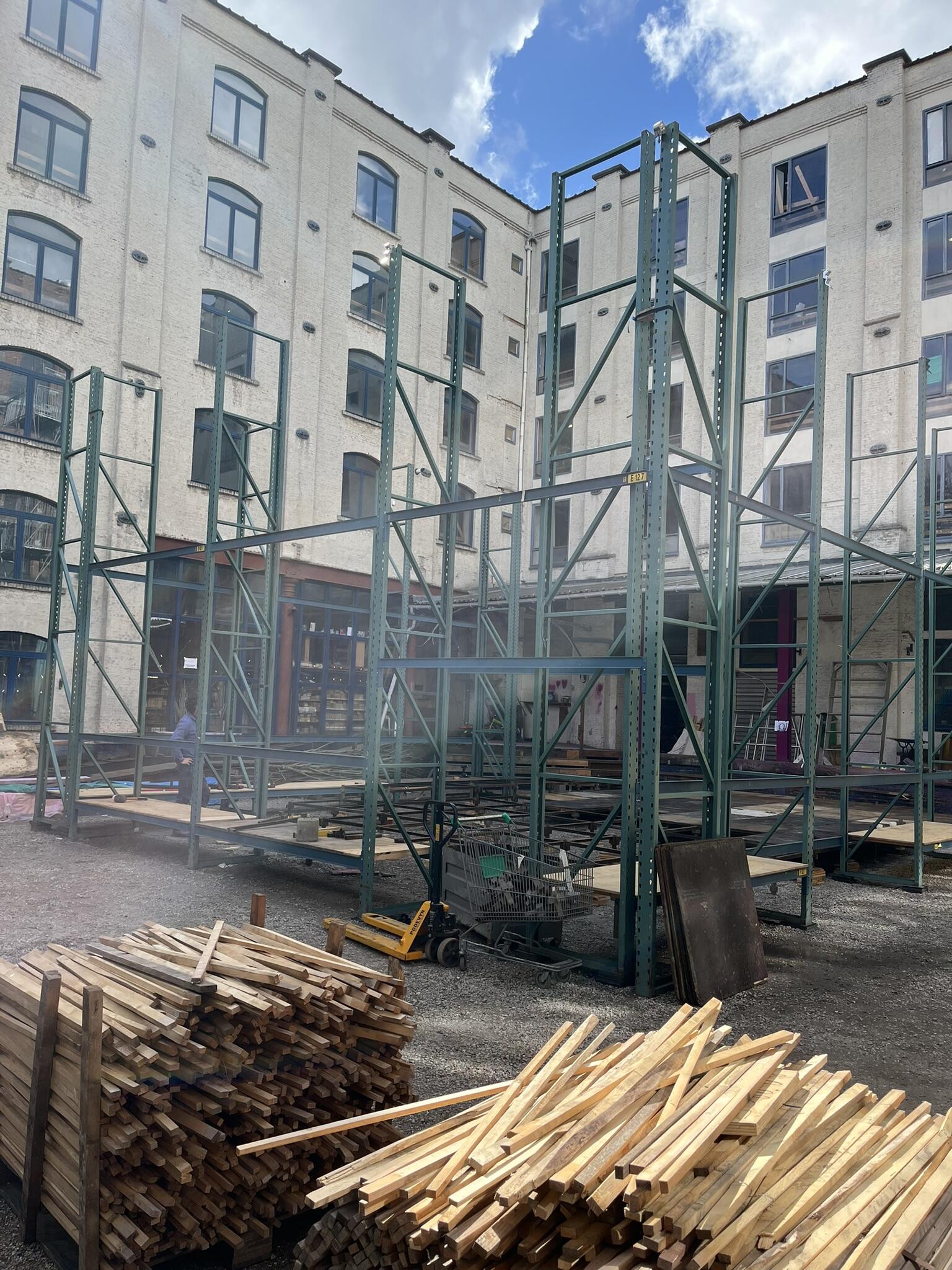
It all began with the ambition of the Brussels-Capital Region to breathe new life into this heritage site by transforming it into a regional hub for production, culture, art and creativity, open to its neighbourhood. This vision gave rise to the Manchester-Bodega project, whose coordination and management were entrusted to the SAU. As early as 2019, with the arrival of Recyclart on part of the site, the SAU set up a temporary occupation scheme in which artists, associations and schools are already experimenting and activating the space. This temporary use anticipates future functions by identifying both the potential and the constraints of the available spaces. However, the Region’s ambition goes further: the goal is to ultimately provide a long-term framework, perfectly suited to these productive and creative energies, while preserving the site’s industrial character.
“Led by the SAU, the redevelopment of the ‘Manchester-Bodega’ site will accommodate nearly 150 people in new workspaces. It reflects the Region’s ambition to address the shortage of this type of public infrastructure and to reduce urban divides between neighbourhoods. The project will therefore fully contribute to the revitalisation of the Canal area.”
Spaces reimagined for creation
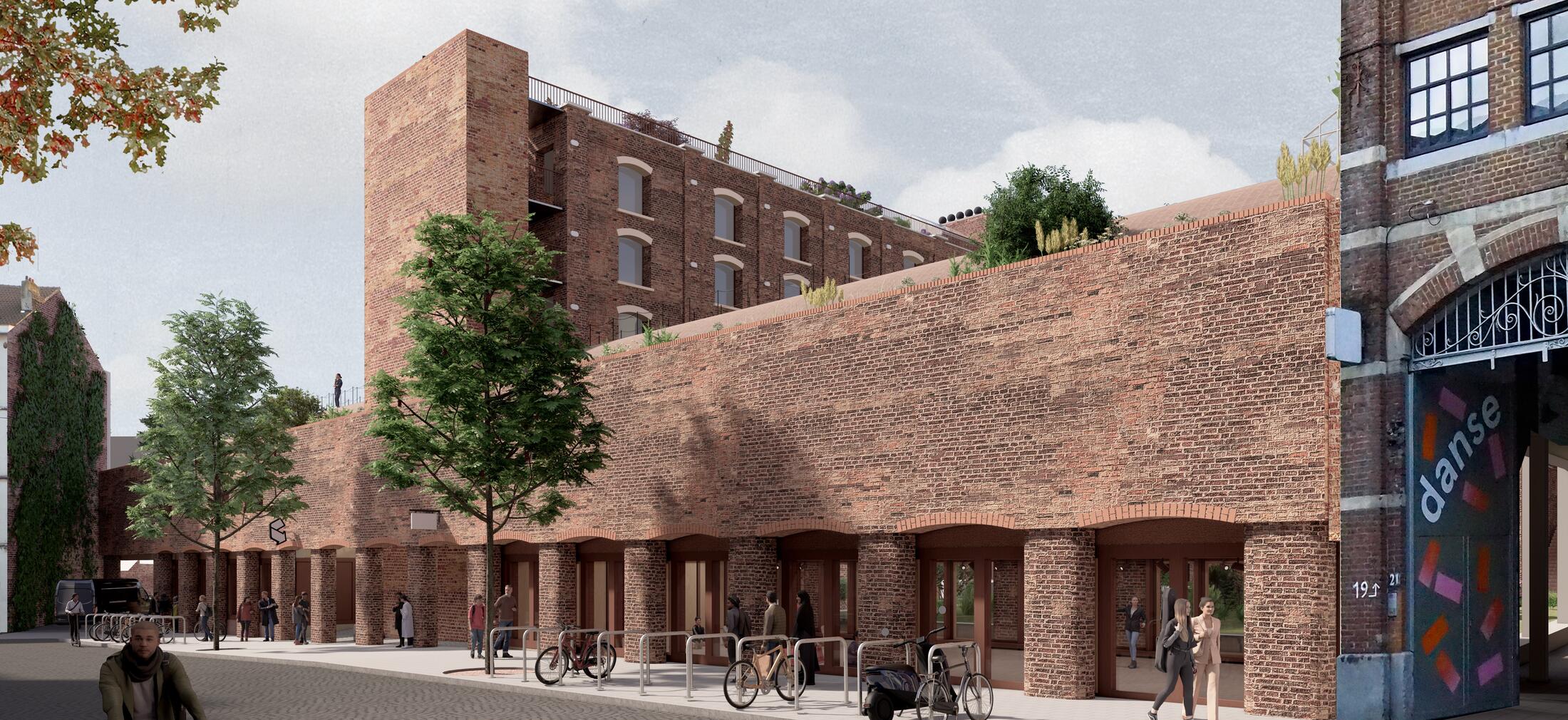
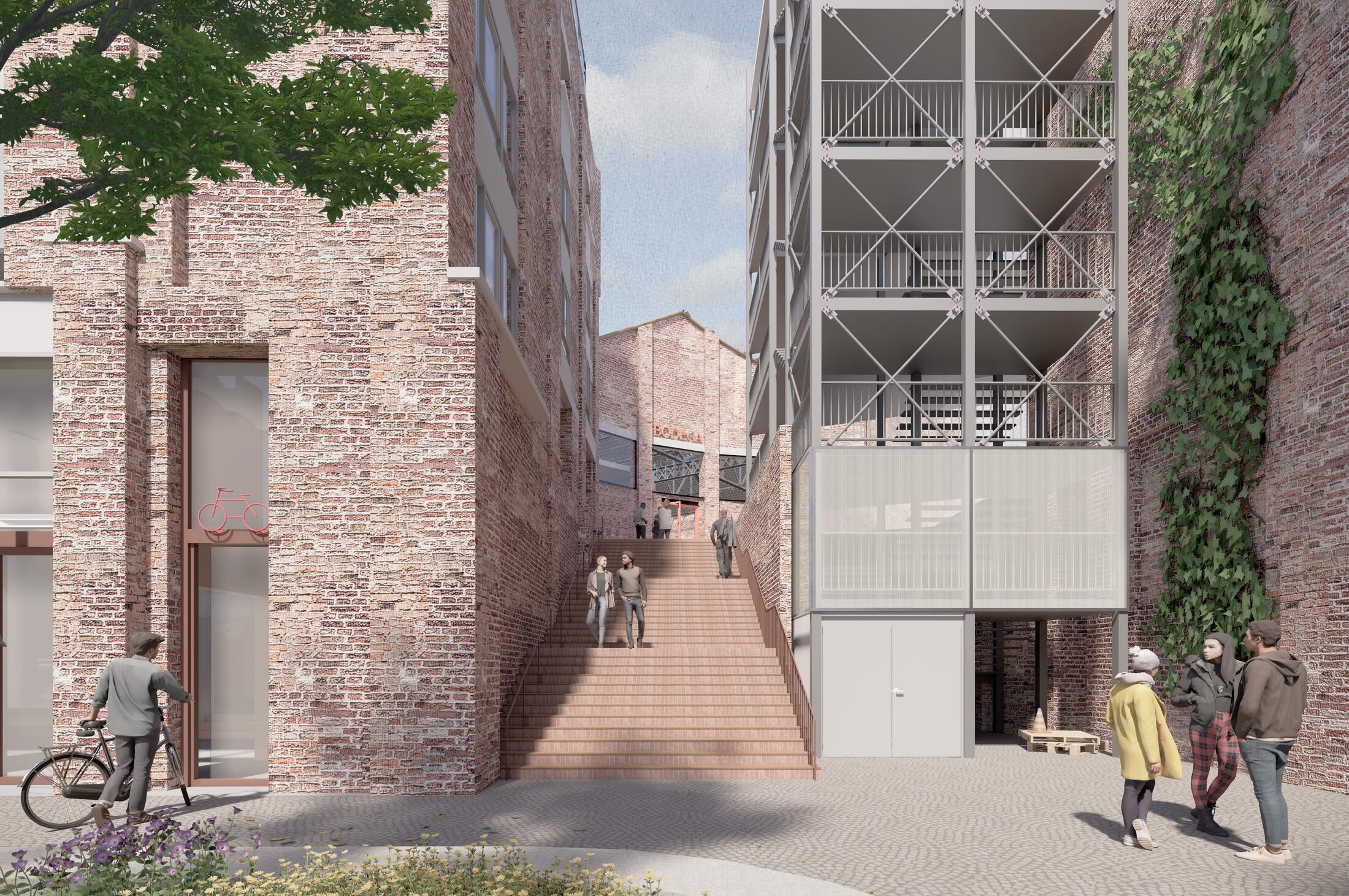
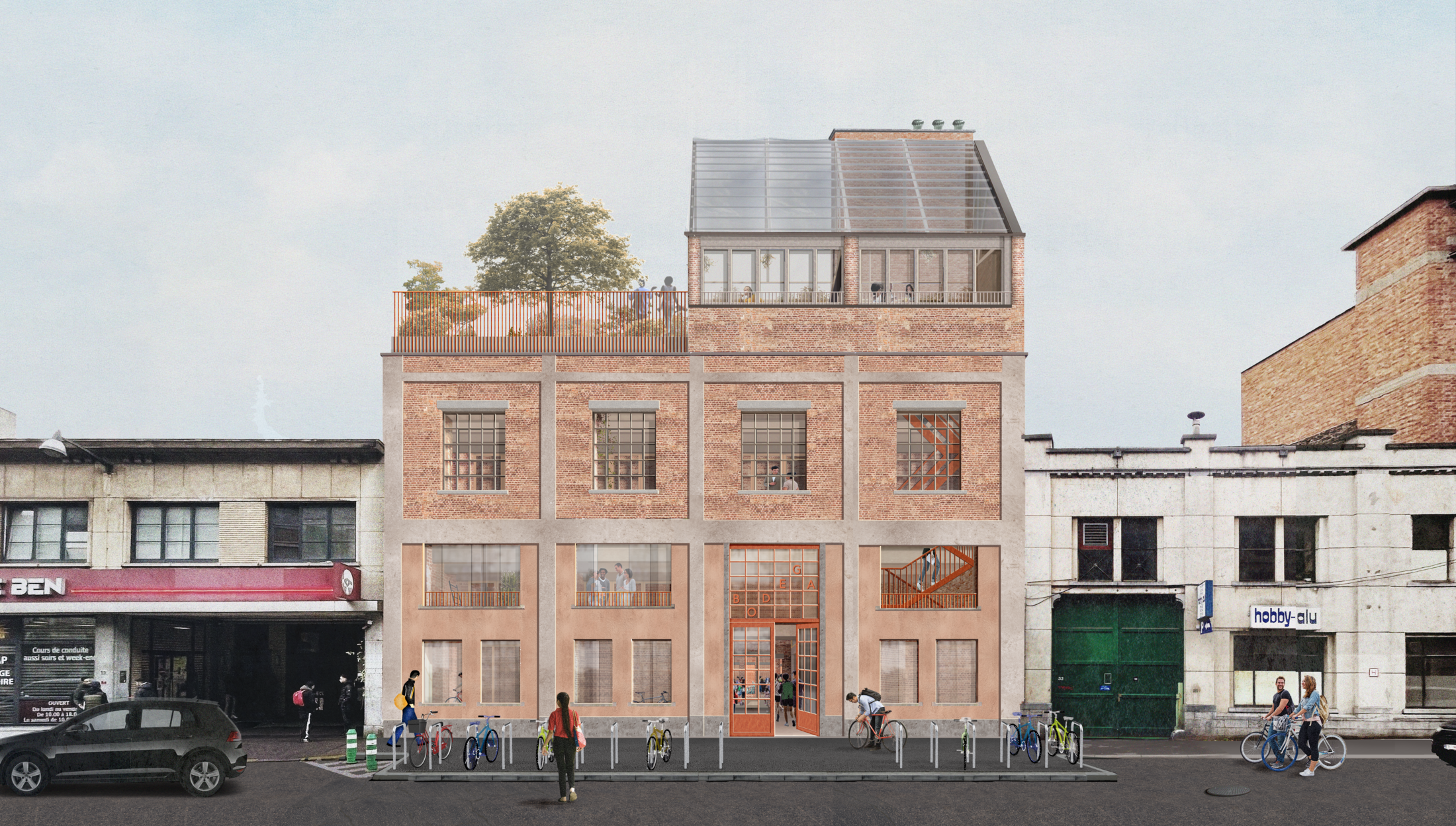
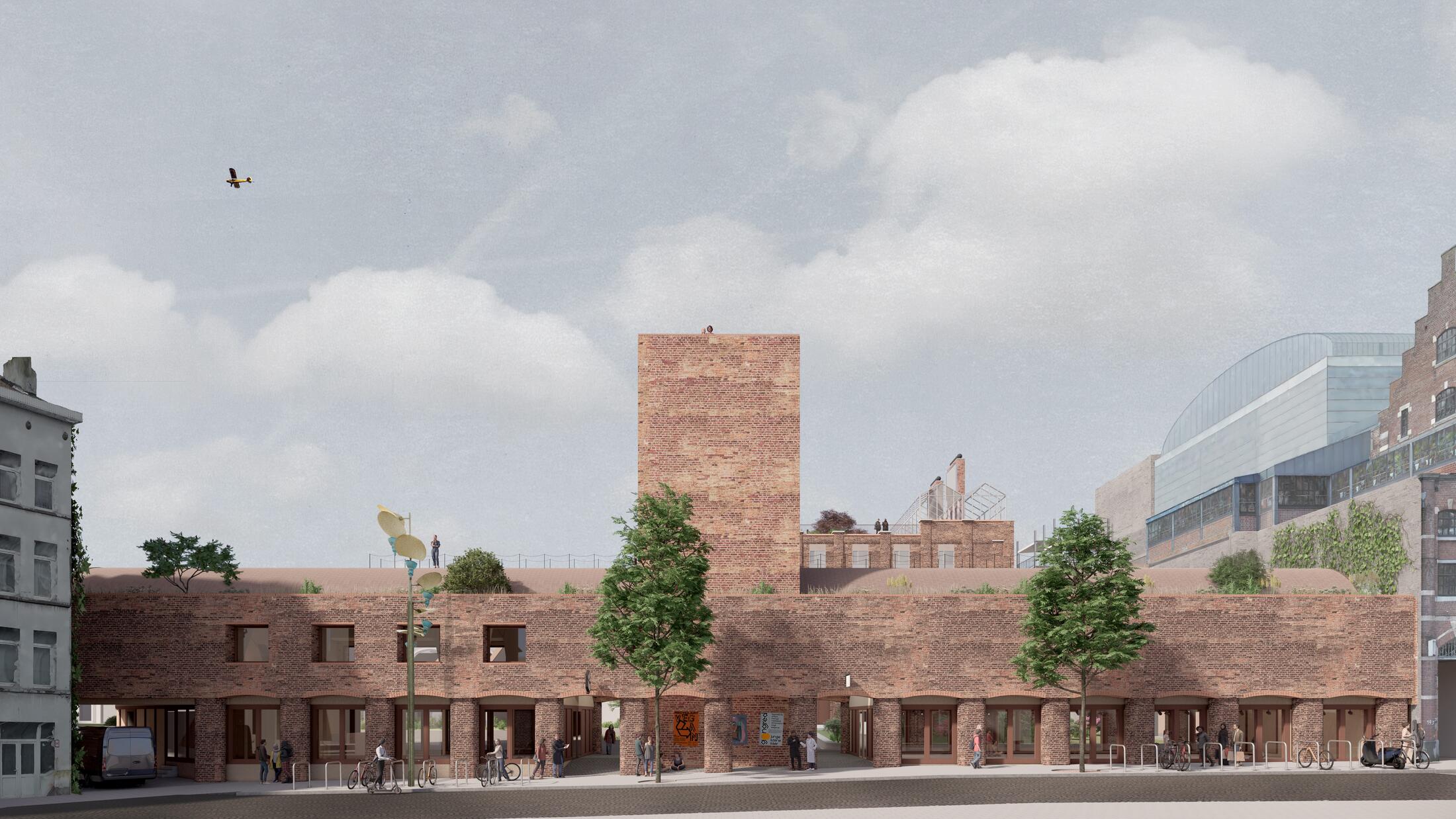
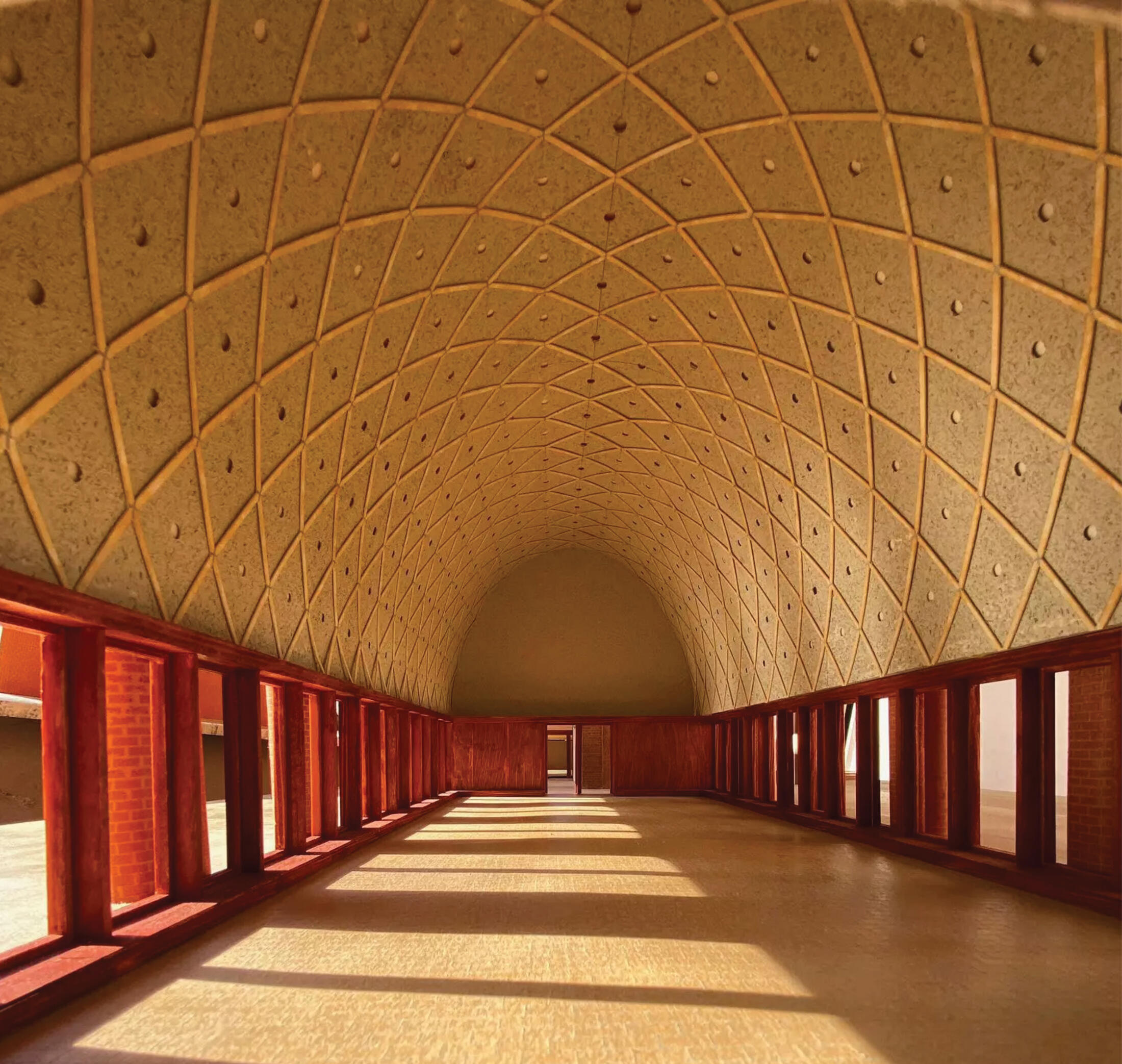
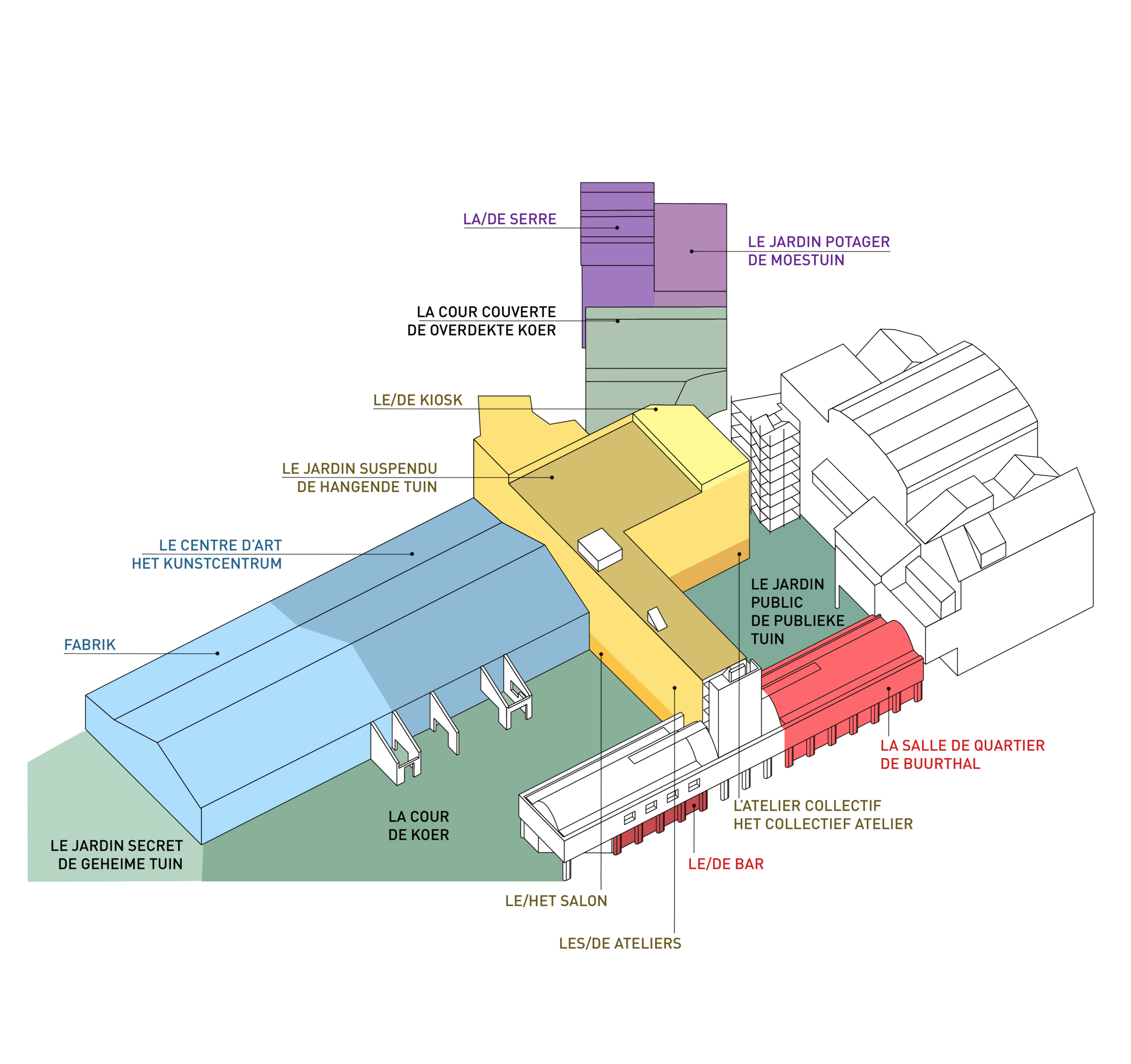
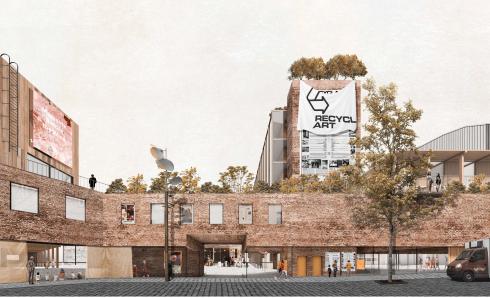
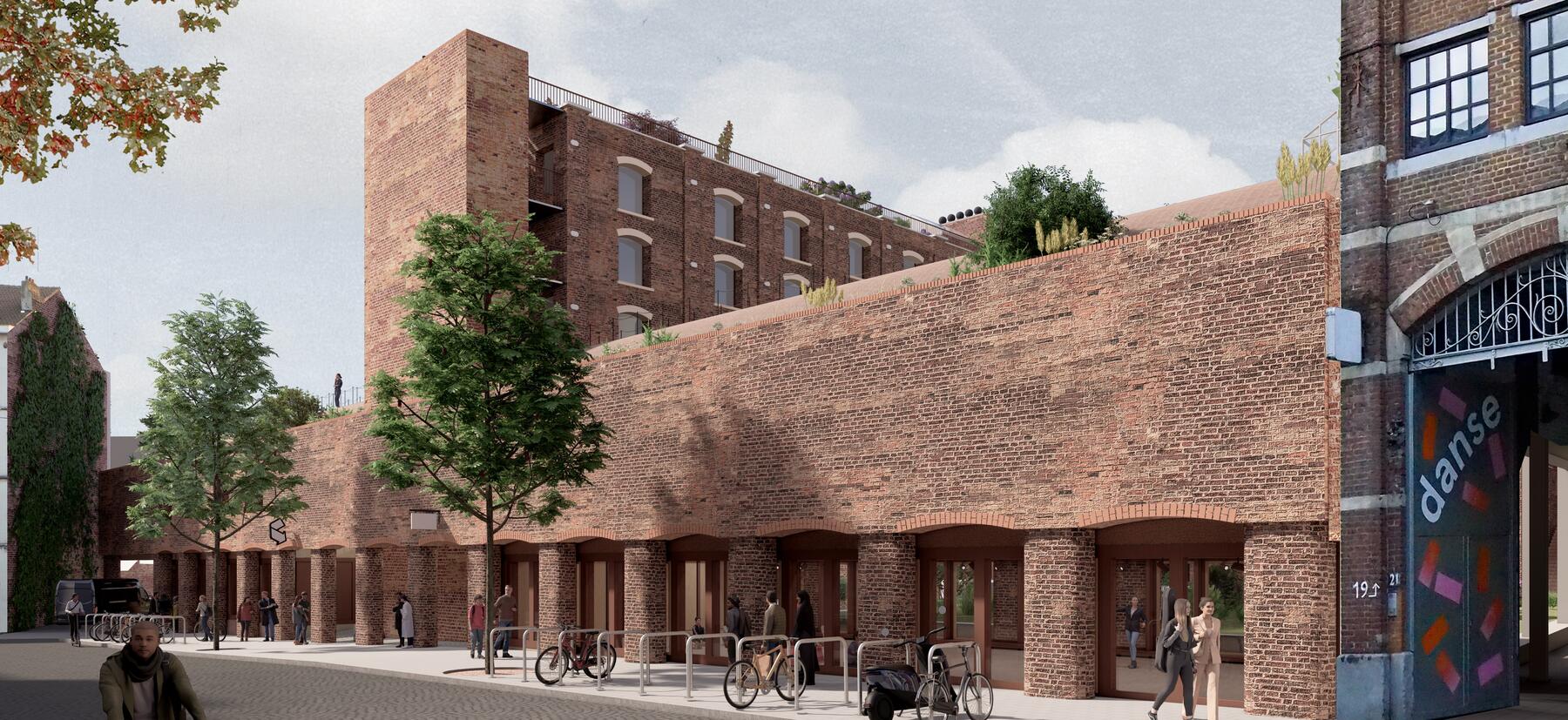
Where a large industrial shed once stood, Recyclart will continue to energise Brussels’ alternative cultural scene. The Bodega, formerly a festive venue, will become a hybrid space combining productive workshops, artist residencies and a rooftop dedicated to urban farming. The vast spaces of the Refinery will be transformed into a true production laboratory, integrating workshops of all kinds and a communal hub. A new passage running through the entire site will reconnect the neighbourhood and strengthen urban continuity. The Plinth, a central feature and the new face of the project, will host a restaurant and a neighbourhood hall—key spaces for meeting and inclusion at the local scale.
A sustainable and circular approach
The project goes beyond simply providing space for urban production and creative activities. It is rooted in a highly ambitious sustainable and circular approach. Wherever possible, existing structures are preserved, thereby reducing the environmental footprint of the works. New interventions are designed to minimise their impact on existing typologies and materials. The materials selected have low CO₂ emissions (reclaimed bricks, local timber, lime-hemp). In addition, 25% of the site will be demineralised to make way for a garden, a logistics courtyard and green roofs. These features will enable the implementation of innovative on-site rainwater management.
Start of works
Construction works, financed by Beliris and a European Regional Development Fund (ERDF) fund, are scheduled to begin in 2027.
Beyond infrastructure, Manchester-Bodega embodies a vision of a city that reinvents itself by weaving connections between its industrial past and its productive and creative future, between its residents and its “makers”, between the walls of yesterday and the ambitions of tomorrow.
The role and actions of the SAU
- Overall project management and coordination;
- Implementation and monitoring of temporary use (definition and publication of the call for projects, selection of occupants, follow-up);
- Monitoring of study progress (architecture, decontamination, asbestos);
- Follow-up of planning and environmental permit procedures;
- Securing and monitoring ERDF and Beliris funding;
- Publication and awarding of construction contracts;
- Supervision of construction works;
- Development of the long-term management model for the project.
Did You know?
Recyclart is a Brussels-based cultural and artistic centre founded in 1997, combining creation, production and social engagement. Initially located beneath Brussels-Chapel station, the non-profit later moved into the large shed adjacent to the former Graeffe refinery, where it now runs a multidisciplinary space dedicated to art and experimentation. Recyclart offers artist residencies, fabrication workshops and a contemporary cultural programme. Its inclusive approach fosters exchanges between artists, craftspeople and residents, strengthening the link between culture and society.
A bit of history
The Graeffe refinery, founded in the 19th century in Molenbeek-Saint-Jean, was a key player in Brussels’ sugar industry. Specialising in the production of sugar cubes and powdered sugar, it contributed significantly to the economic development of the neighbourhood. Its activity gradually declined in the 20th century due to the modernisation of sugar production processes and increasing international competition. Closed for several decades, it nevertheless remains a strong landmark in the urban landscape and an emblematic element of local industrial heritage. Proof of this: its famous brown sugar still delights generations to this day!
Project managers
- Bruno ALLARDIN