FRAME
FRAME activates the Mediapark ecosystem
When the idea of constructing a building specifically dedicated to the communication, media, and audiovisual sectors first emerged, the ambition was to design a structure that would anticipate the future ecosystem of the Mediapark district. From the outset, the regional media outlet BX1 showed strong interest in the project and became actively involved.
On this basis, the SAU—owner of a plot located at the corner of Boulevard Reyers and Rue Colonel Bourg—launched a call for architects. Among the 51 applications received, one proposal stood out: that of the Baukunst (Brussels) – Bruther (Paris) consortium.
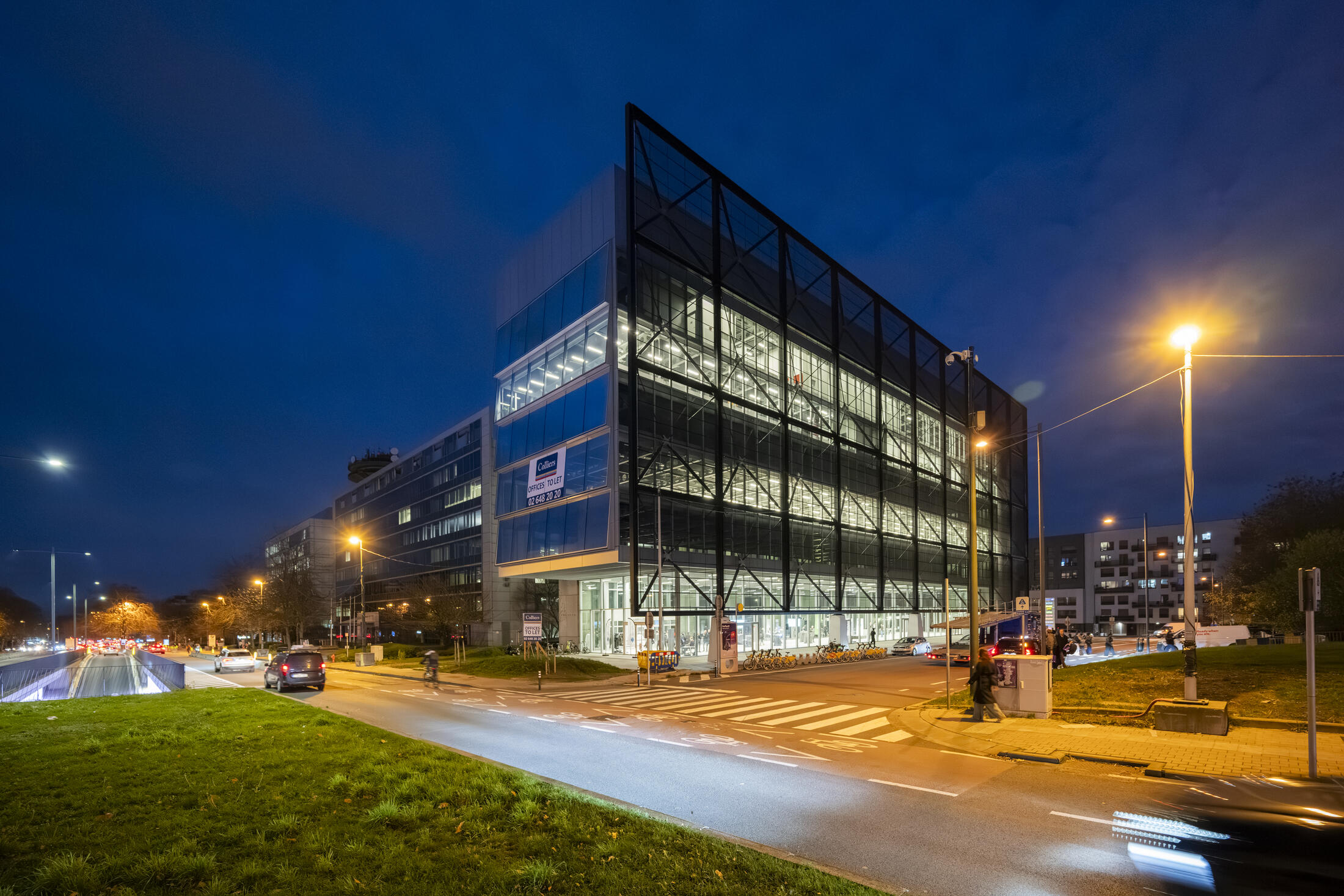
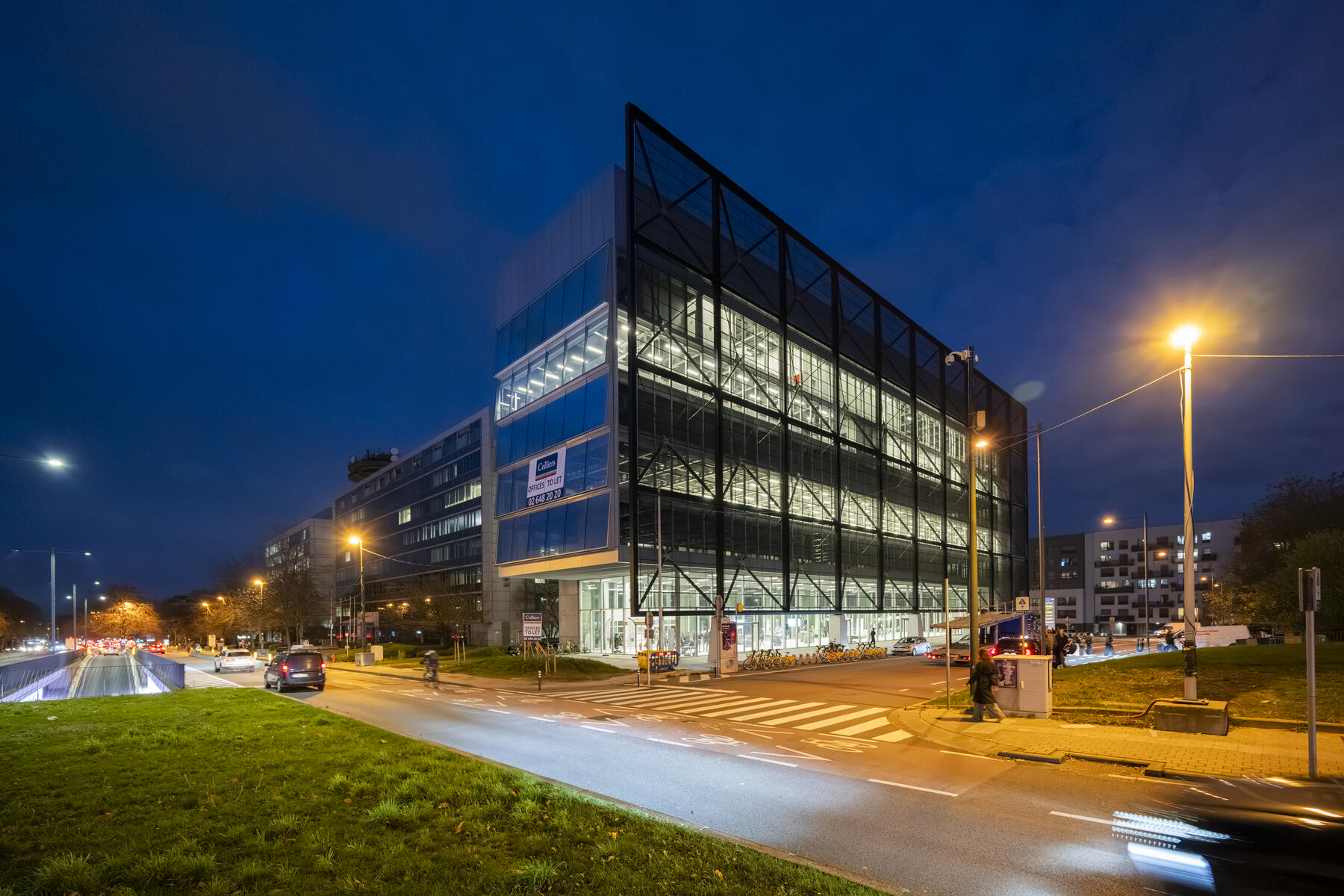
The project—a fully glazed 8,500 m² building with highly flexible spaces—was from the very beginning aligned with the regional ambition to structure and energize the media, audiovisual, and communication sectors in the capital. Its construction began in parallel with that of the new buildings of VRT and RTBF, sketching the first outlines of the district’s renewal, of which it forms a key component. Its objective is clear: to create a community of companies and enable them to establish themselves sustainably in Mediapark, with infrastructure tailored to their needs.
A technical and architectural feat
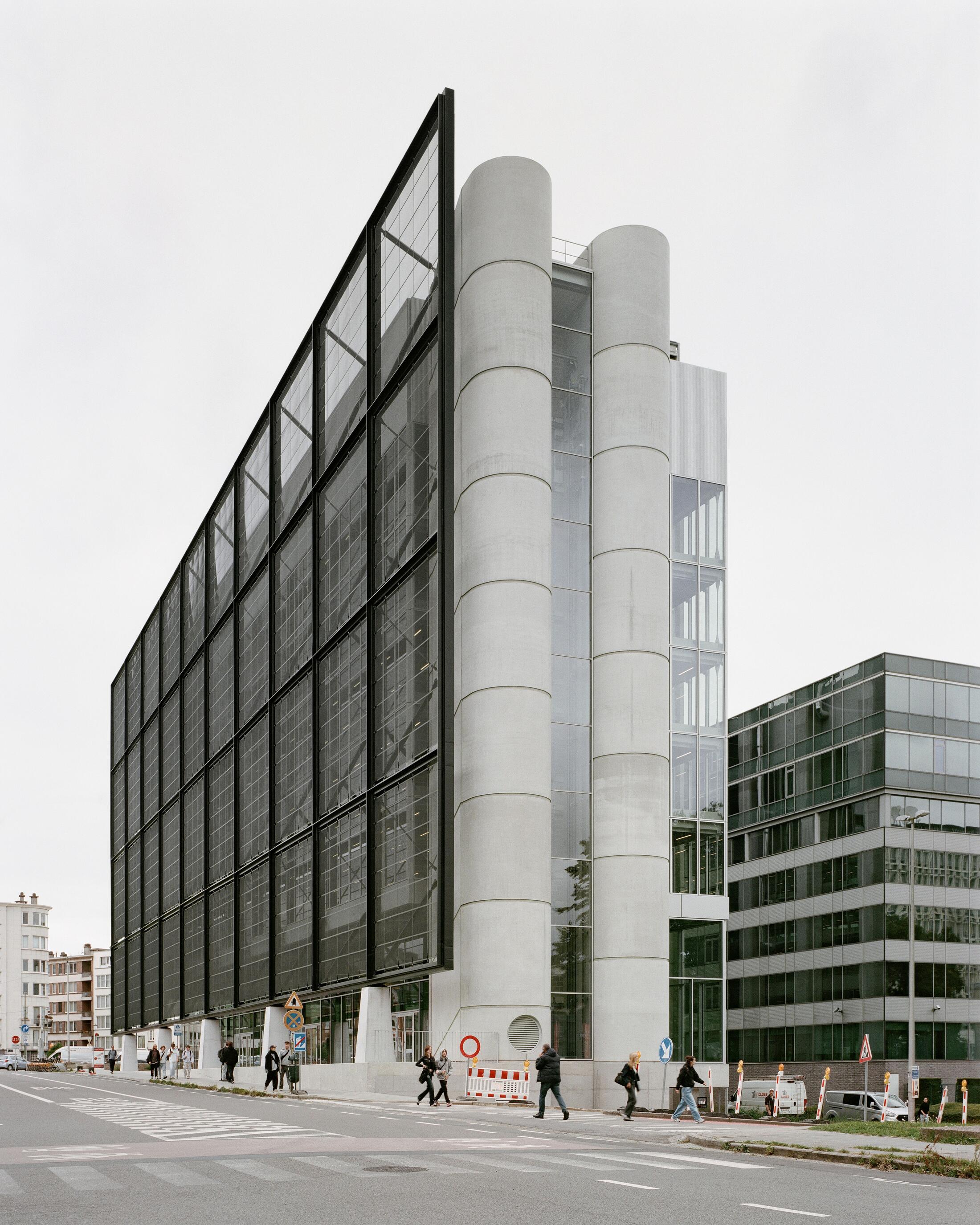
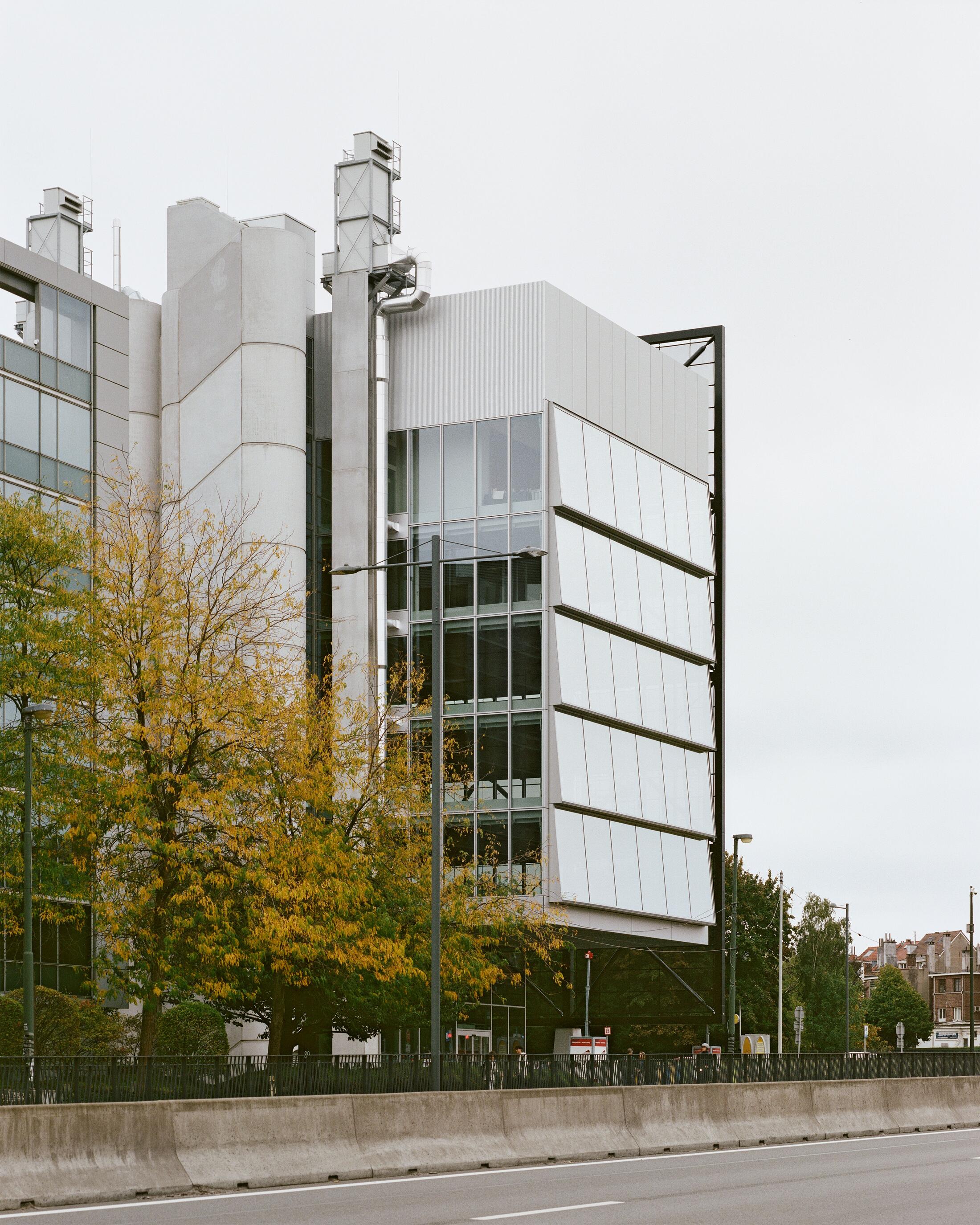
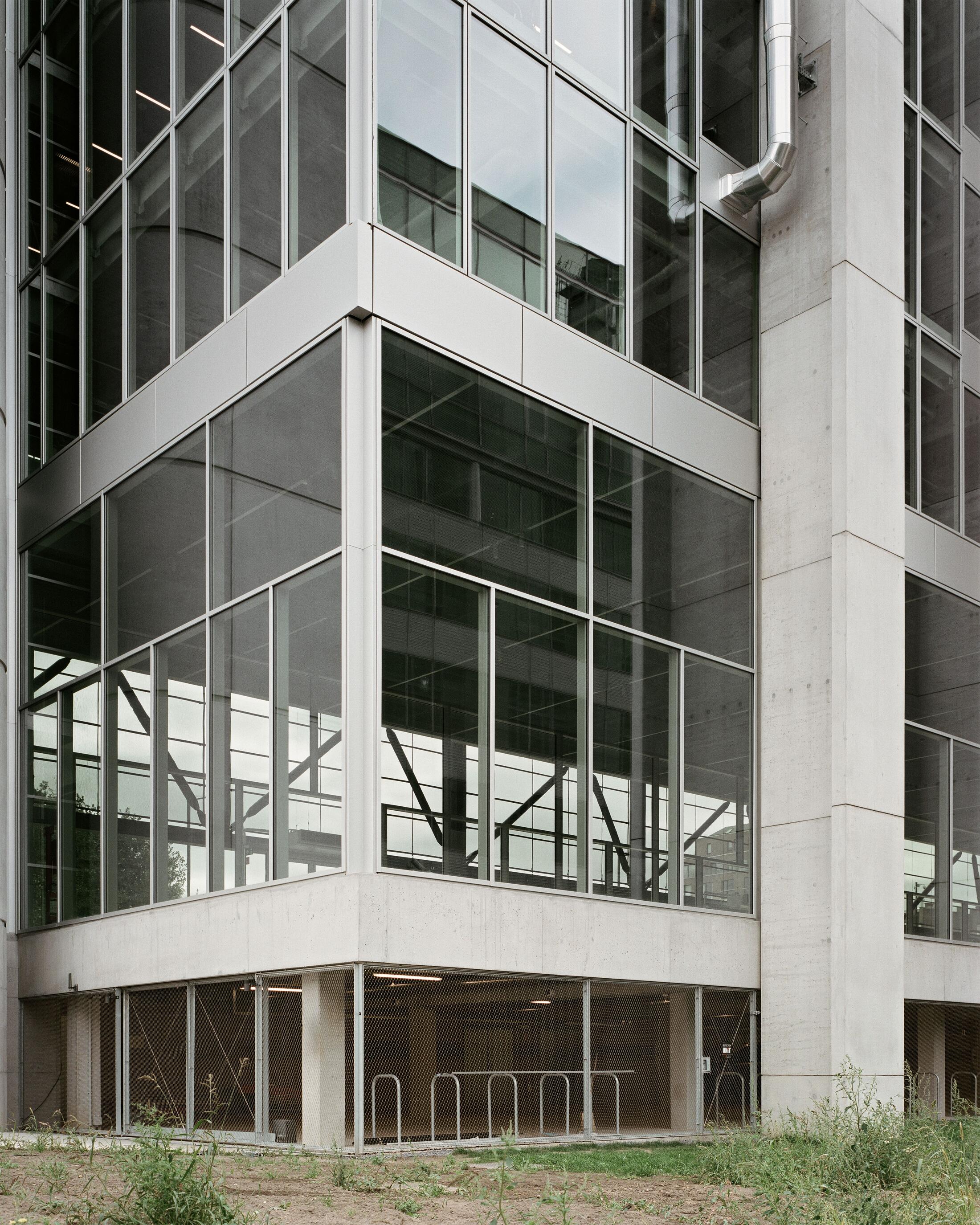
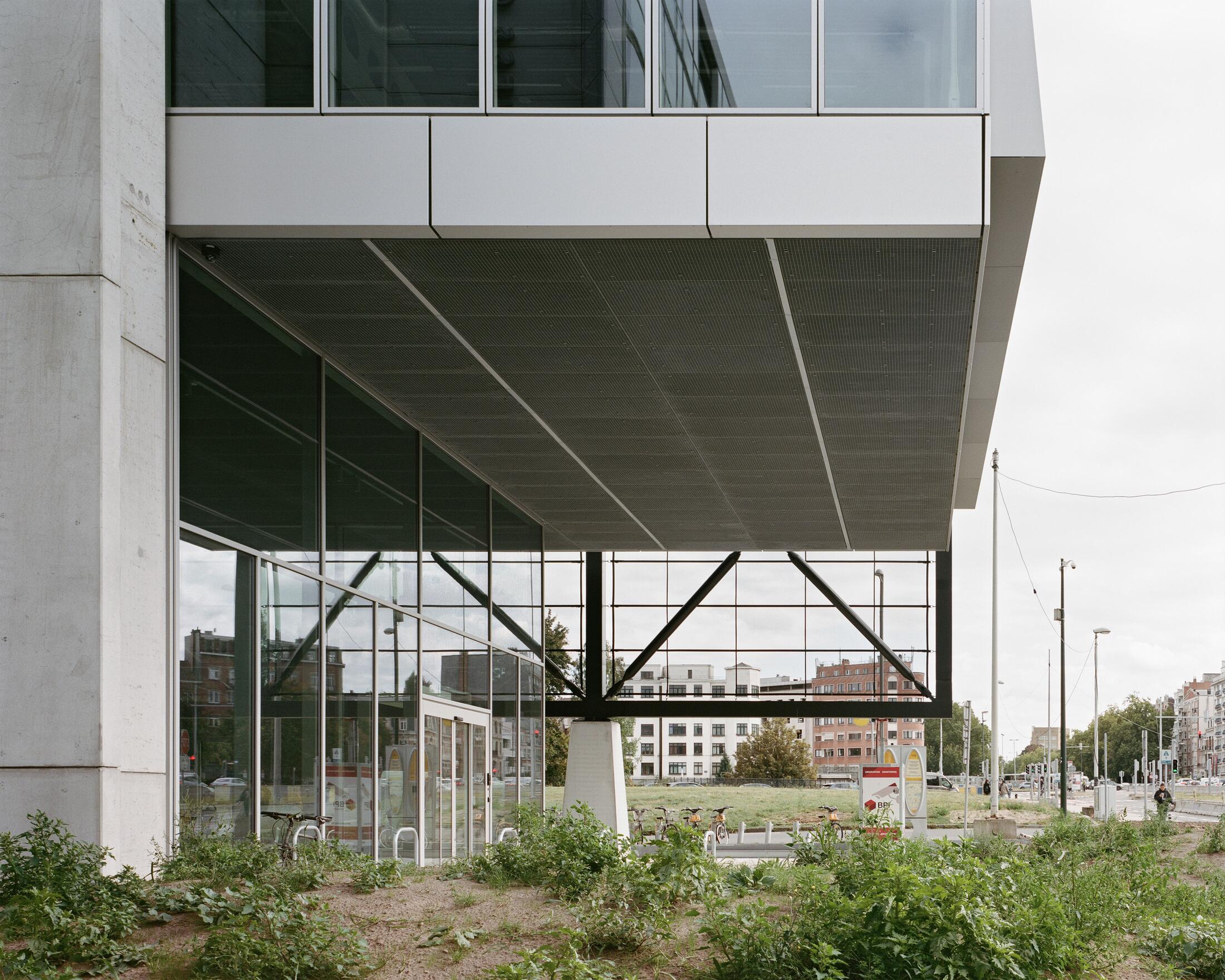
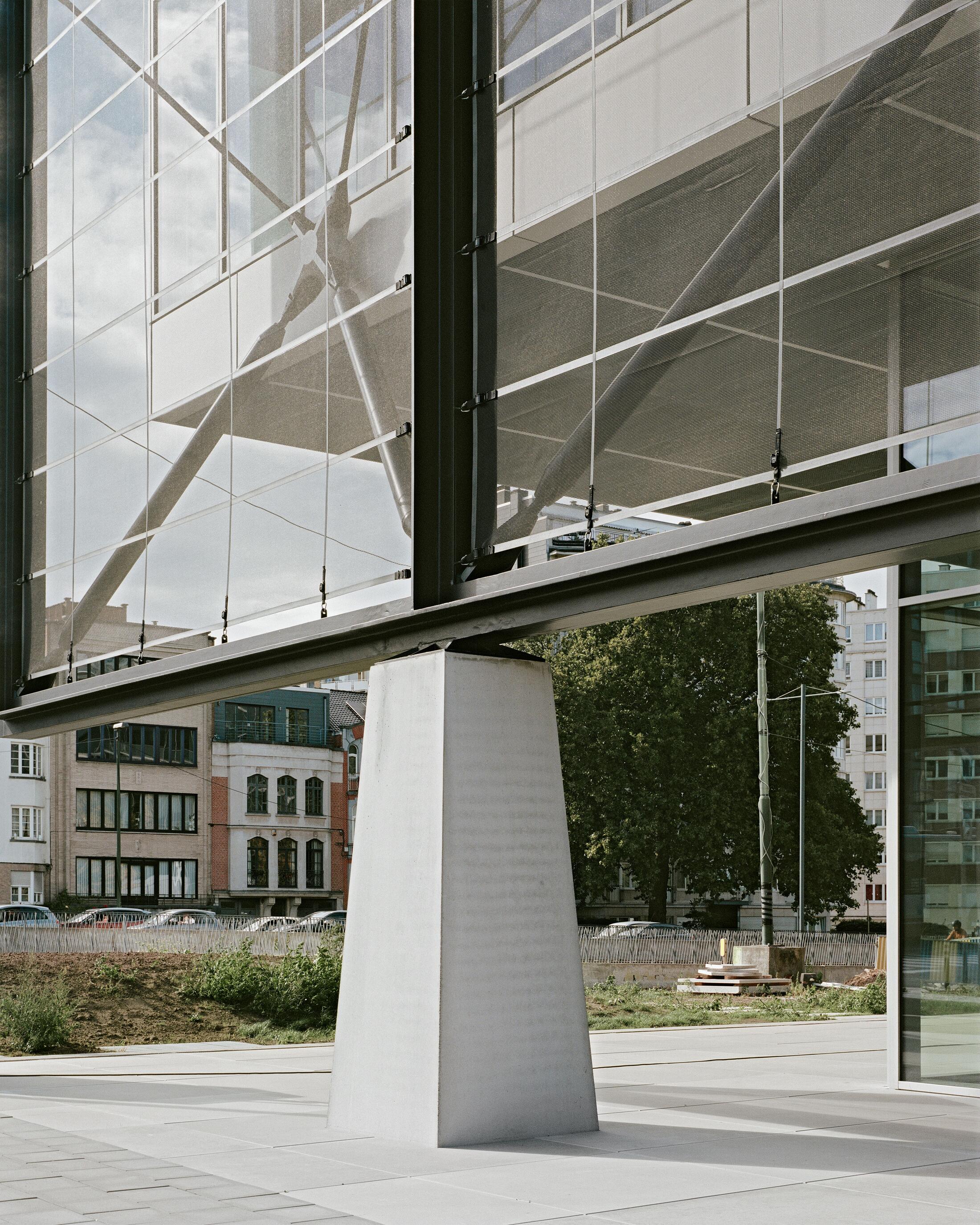
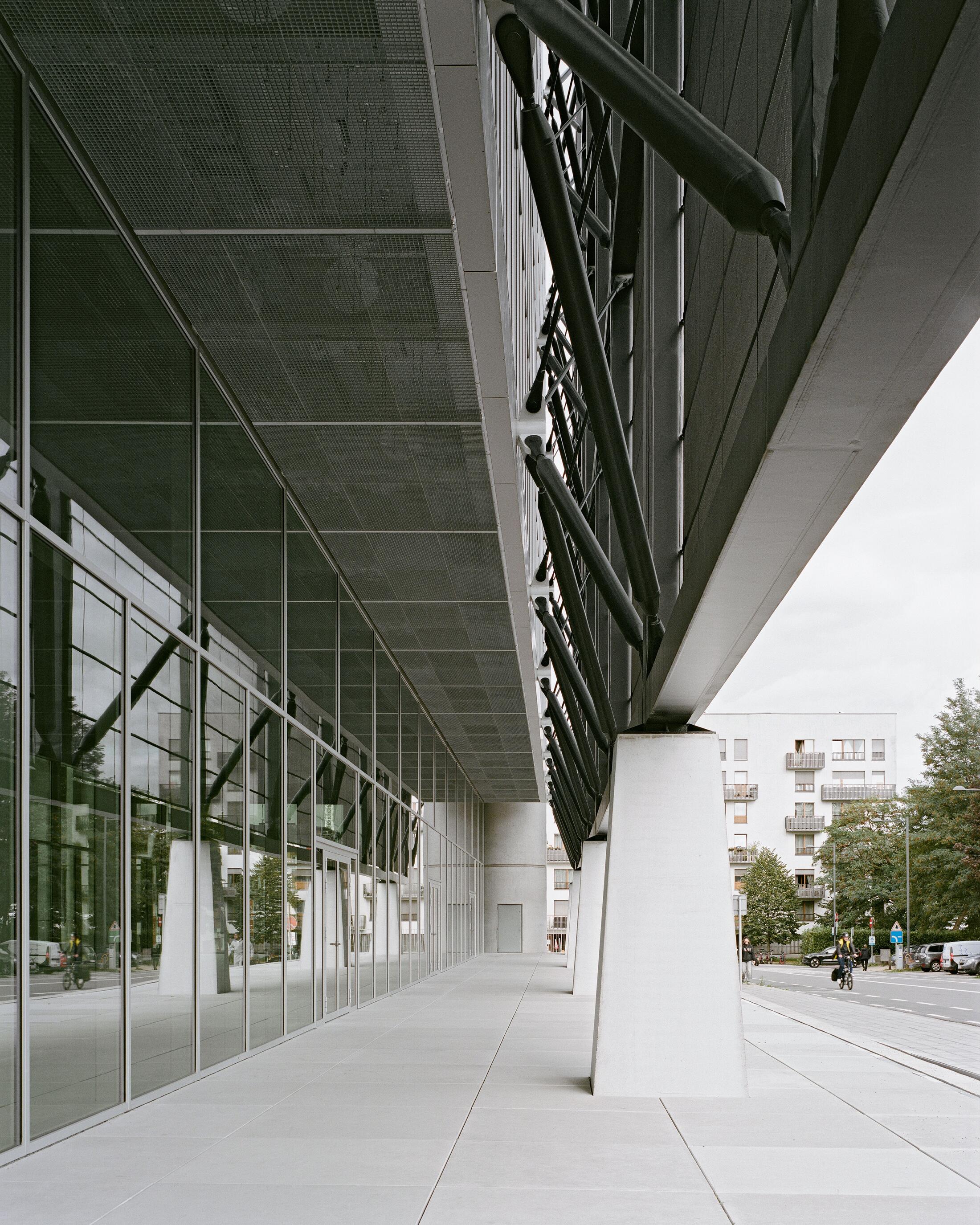
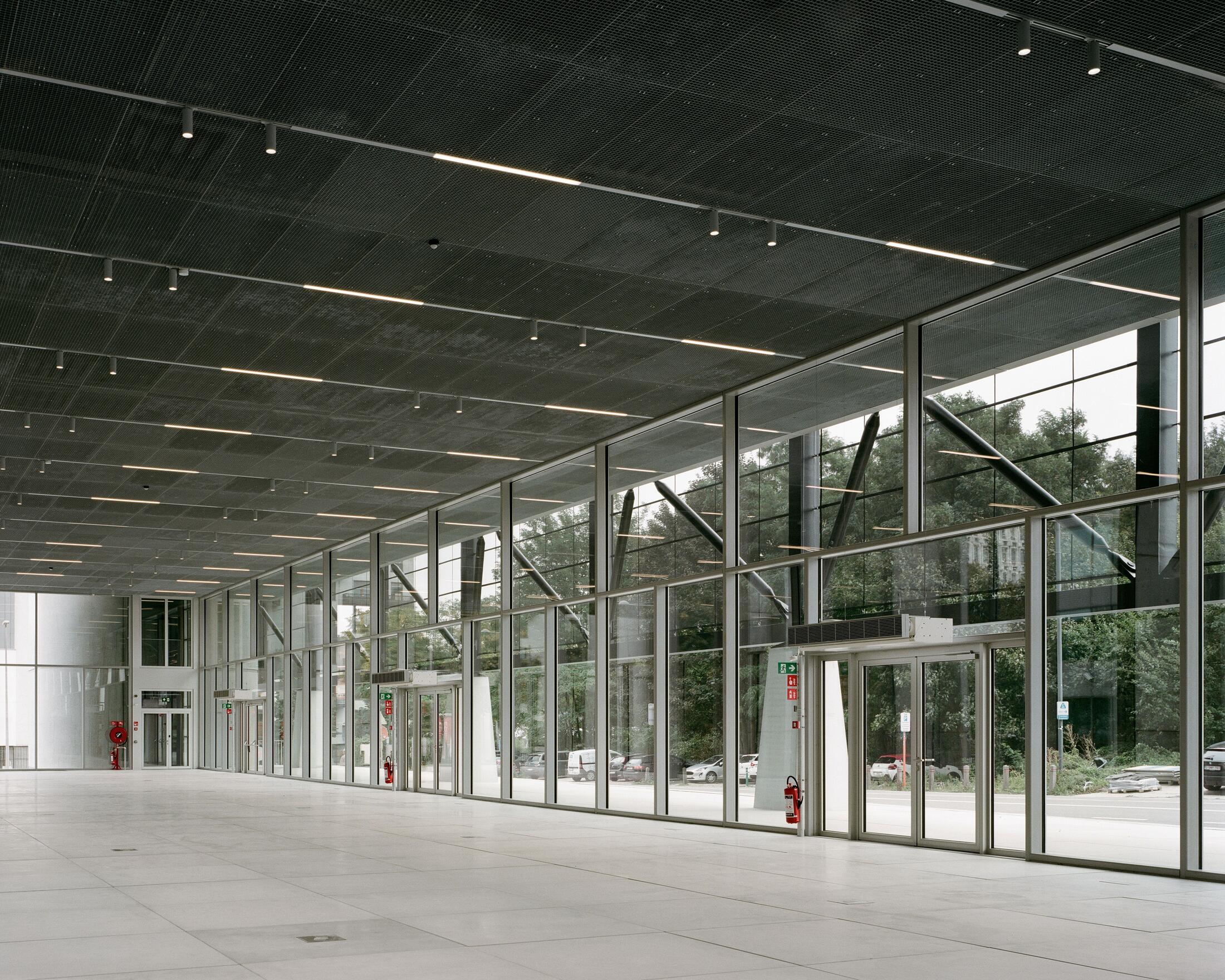
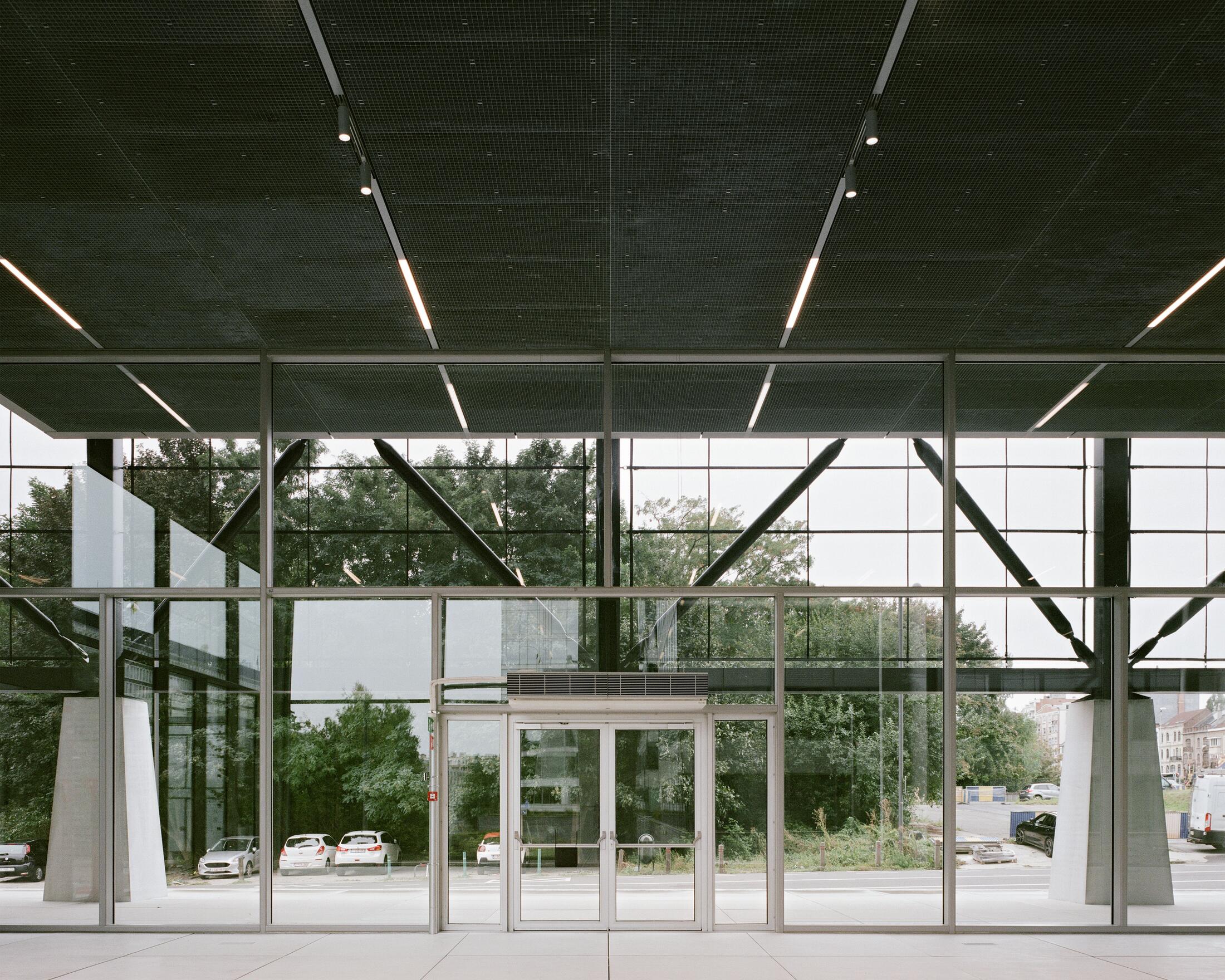
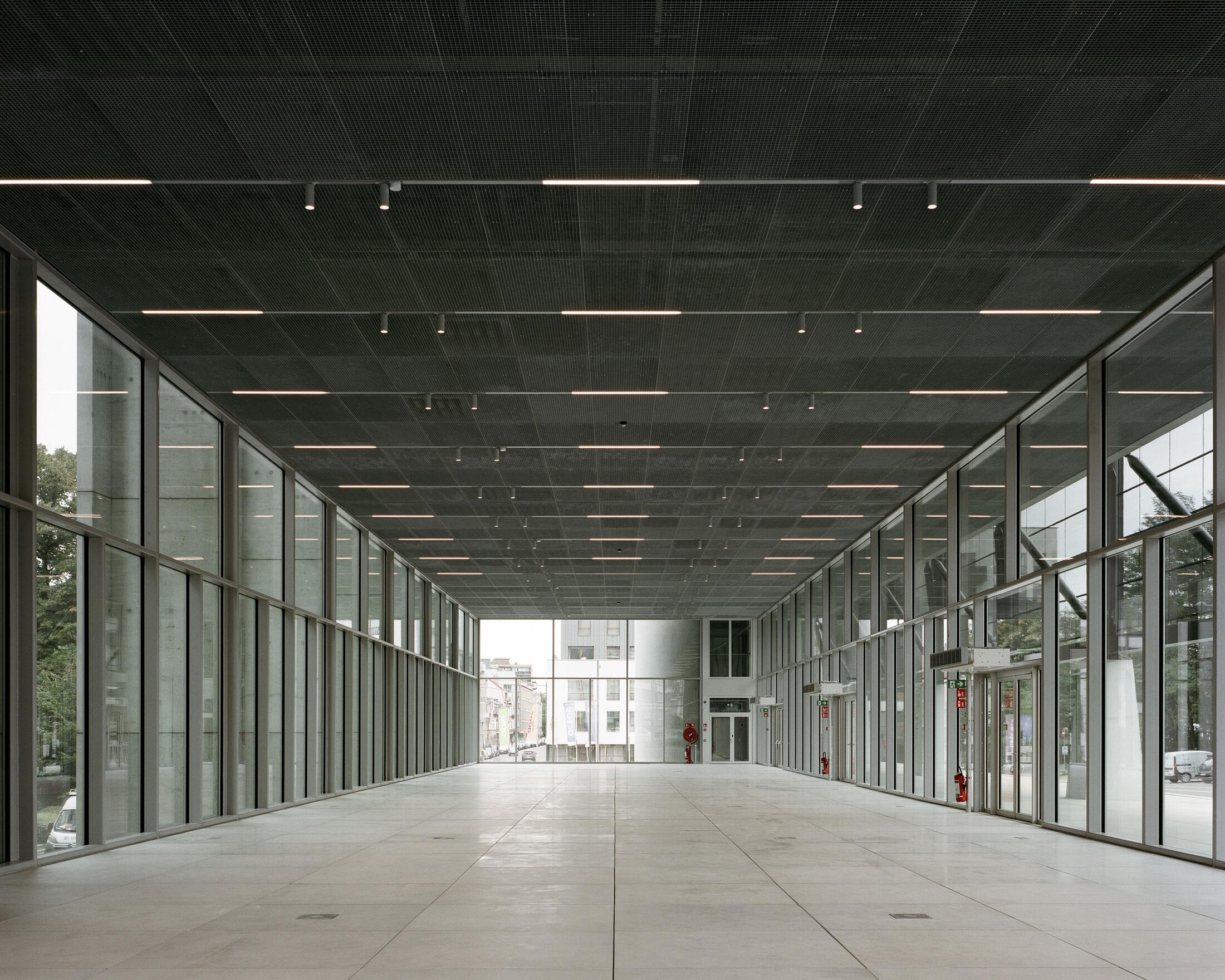
Based on a highly rational use of space, FRAME pushes the boundaries of traditional architecture through a design without internal load-bearing walls. Supported by a steel exoskeleton and concrete columns, its structure—combined with externalized circulation cores and services—optimizes spatial efficiency and frees interior spaces from technical and structural constraints.
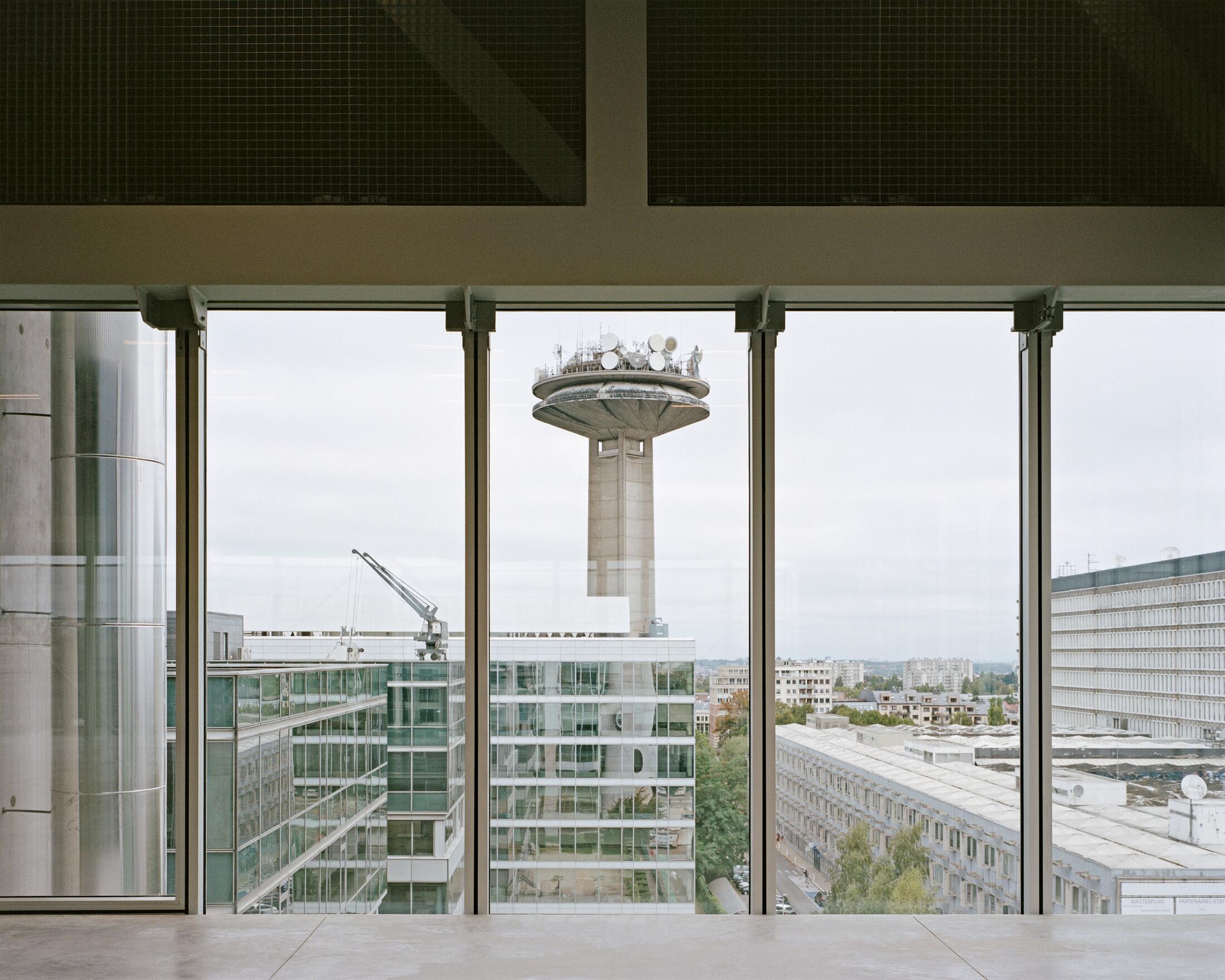
This technical achievement makes it possible to offer vast open floor plates of 1,000 m² each, widely open to the outside and ensuring maximum flexibility. The building is designed to evolve over time and adapt to the changing needs of the companies and creators who occupy it. Its configuration provides abundant natural light and uninterrupted views across the city. This approach ensures an optimal balance between usable floor area and built surface, making FRAME a model of adaptability and architectural intelligence.
Load transfer: a complex technical milestone
In 2024, the structural works were completed. The load transfer phase marked the end of a crucial stage: the temporary structures that had supported and reinforced the overall framework were removed, revealing the building’s bold architecture. Working tirelessly, all trades contributed to completing the building, up to the installation of solar shading canopies that help regulate the generous southern exposure of the façade.
This approach guarantees an optimal balance between usable and built surfaces, making FRAME a benchmark in adaptability and architectural intelligence.
In December 2025, the building was inaugurated, and BX1 moved into the top two floors. An agreement was concluded for the operation of a business center aimed at creating a “Media” ecosystem for freelancers and very small enterprises. The second and third floors are available for rent to companies active in the media, audiovisual, and communication sectors wishing to benefit from the synergies offered by Mediapark, the presence of two communication schools, and its national media players (RTBF, VRT, RTL).
On track to make FRAME a reference for the creative and media industries!
Did you know?
The name “FRAME” refers to several concepts:
- Framing in visual media;
- The open framework and flexible grid supporting the development of an ecosystem within the building;
- The form and structure of the building’s main façade, on the Diamant side.
The role and actions of the SAU
- The SAU owns the land on which FRAME is built;
- As contracting authority, the SAU conceived the project in line with the regional ambition to develop the media and audiovisual sector at Mediapark;
- The SAU ensures the proper integration of FRAME within Mediapark.
FRAME in figures
- Floor area: 8,500 m² spread over 6 levels + one basement
- Role of the SAU: owner and project manager
- Partners: HUB, BX1
- ERDF funding: €17,180,263
- Architects: Baukunst–Bruther
- Contractor: BAM–Groven+
Key dates:
- 2020: permit for the building
- 2021: BAM Interbuild - Groven+ appointed to build Frame and the construction works began.
- 2024: completion of structural works
- 2025: official opening and BX1 moves in
- December 2025: winner in the Major Intervention category of the Brussels Architecture Prize
Project managers
- Ann-Sophie DOESBURG
- Frank VAN de MERGEL
- Noël MATTELET